Posts

Showing posts with the label Melbourne

What are Selective Catalytic Reduction and Urea Injection?
Image
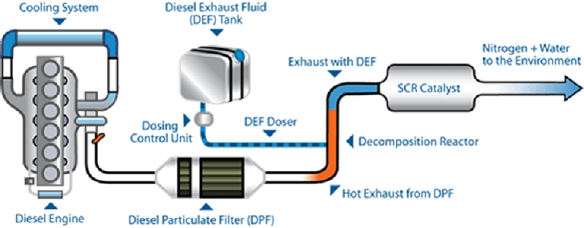
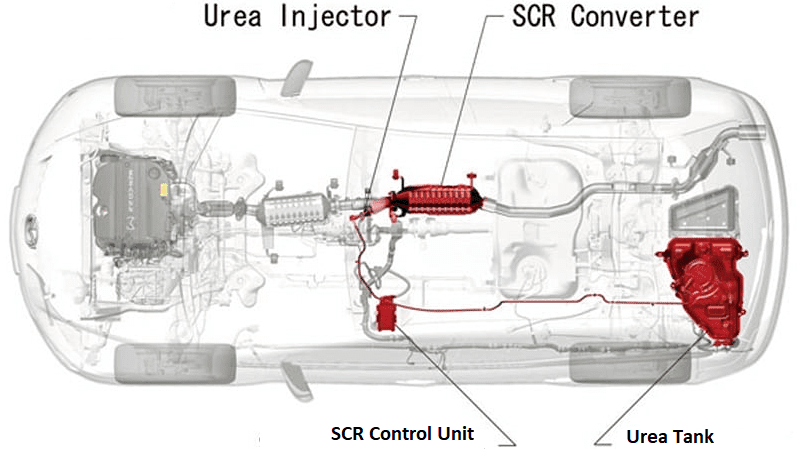
Injection systems improve engine performance , so why shouldn’t a similar mechanism enhance your exhaust output? Instead of fuel injection , however, the tech we’re about to discuss injects Urea into diesel exhaust streams. Buckle in while we explain what’s known as Selective Catalytic Reduction and Urea injection . It’s a chemical process that’s been used in industrial diesel engines for some time now, and it’s also found in car exhaust systems . What is Selective Catalytic Reduction (SCR)? Selective catalytic reduction technology uses an active chemical injectant as an emission mitigation solution. Specifically, the catalytic agent targets the poisonous nitrogen oxide (Nox) fumes in your exhaust , which is why the technology earns the “selective” prefix. Down among the exhaust pipes , a dosing tank is injecting a gaseous reductant into the engine byproduct stream. A redox reaction takes place between the reductant and the nitrogen oxide. Basically, through some invis...

Functions of Oxygen Sensors in Exhaust Systems

Image
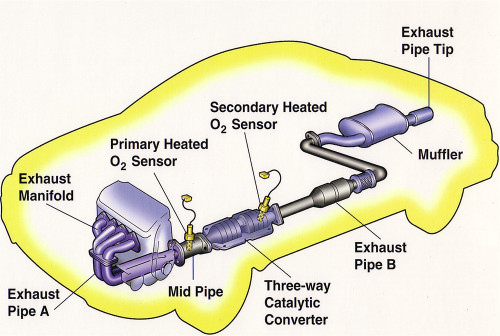
Back in the day, the earliest exhaust systems were dumb metal linkages. Sure, the welded pipes worked efficiently. They rid the engine of waste gasses well enough, but there was no emissions control in the system. Today’s exhaust pipes are smart by design. They incorporate a special oxygen monitor, an O2 sensor that monitors and controls engine emissions. It’s all about feedback, but what is this control loop altering? Fuel Mixture Oxygen sensors (O2) are typically installed in the exhaust manifold . They monitor oxygen because this is the atmospheric gas that mixes with your fuel to generate combustion. Engines are finely tuned so that the bulk of the fuel is burnt and no waste remains, but if the burn ratio is oxygen rich, well, this heavy mix will induce waste. Similarly, a lean oxygen-to-fuel mix also produces pollution. The O2 sensors detect this misbalance and send the data to your engine’s computer, which is when the check engine light starts to flash its warning. ...

What Would Cause a Muffler to Explode?

Image
It’s a jaw-dropping prospect, isn’t it? The notion that some unprecedented influence could cause a muffler to explode. Like a blocked pipe in a plumbing system, pressure builds when a fluid-conveying tube is obstructed. Unlike the dirty backup spawned by clogged plumbing, the pressure build-up in the exhaust could make the muffler rupture, so what’s generating the build-up? Is it a blockage, or is it something else? System Deterioration The catalytic converter is loaded with ceramic parts and honeycombed metal plates. Each unit is slightly different due to architectural variances, but metal assemblies and heat-absorbing elements are always part of the inner workings. They catalyze engine fumes while releasing harmless gasses into the tailpipe. Unfortunately, these elements are susceptible to damage. Pushed forward by engine backpressure, the broken innards of a catalytic converter will create a blockage. From here, the pressure goes to work on the muffler seam. In short, i...

What Are Exhaust Manifolds?

Image
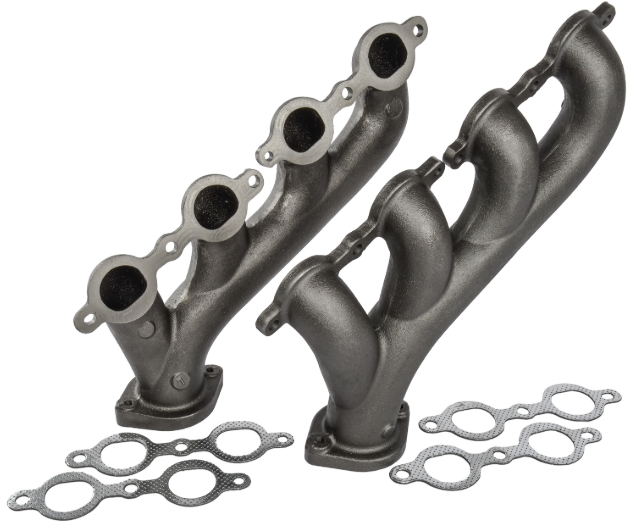
Exhaust manifolds are designed to couple each exhaust port of an engine’s cylinder head to a single outlet pipe. Functionally, the steely unit collects ejected waste gasses from the multiple cylinders and ejects them into a single pipe conduit. Viewed from a purely structural viewpoint, the little collector unit is manufactured as a blocky series of aligned ports. Its job is to merge the collected streams of cylinder-burnt gasses, to combine the multiple exhaust outlets into a single channel. Let’s take a closer look. Engine-to-Exhaust System Interface Exhaust manifolds bolt to car engines via heat-resistant gaskets. They’re the compact factory-installed workhorses that convert multiple exhaust outputs into a lone stream so that the unified volume of dirty gas can be expelled down one channel and out through a car’s tailpipe. Unfortunately, that compact profile does not favour free engine respiration. It’s a bit like dropping your head to your chest and trying to breathe freel...

Functional Differences between Mufflers and Exhaust Systems

Image
It’s not always easy to discern the differences between mufflers and exhaust systems . That’s probably because some of us are guilty of liberally swapping the terms whenever it suits us, but this practice needs to stop. End that confusion by remembering a muffler is a chamber for “muffling” the noise generated by the exhaust system. Then, drive that point home by knowing the full architecture of a top-of-the-line exhaust system. What is A Muffler? This chamber lives as an inline component within the exhaust system. It’s generally located at the end of the pipes, just before the tailpipe. Now, there might be a tailpipe extension down there, perhaps a couple of mechanical clamps supporting the additional pipe section, but this noise attenuator is still located at the rear end of the piping. It’s generally filled with chambers and perforated tubes. Functionally, this little devil should absorb sounds so that the car runs quietly. Realistically, at least on performance vehicles, th...

Diesel versus Gas Engine: Is There Any Difference on How an Exhaust System Works with Each Fuel Type

Image
The diesel versus gas engine debate has been around forever. Both fuel sources require different types of engines because their fuel sources expend energy via two opposing methods. Meanwhile, turbochargers and fuel injection systems add complexity to the mechanical innards in the diesel compartment. These design factors explain engine performance differences and the need to roll up to the right pumps, but how do they affect  exhaust system differences ? In point of fact, are there any differences between them? Compression Contrary Designs Engine Compression characteristics are pushed to the limit in diesel applications. Temperatures rise higher, internal pressures are elevated, and gas velocities are accelerated. Conversely, more torque is generated by a diesel engine than a comparable gas model, so these lower RPMs will produce as much power as a fast-cycling gas engine. Supplemented With Turbocharger Kits The spark-less cylinders in a diesel engine rely on a compr...

What is a Header Back Exhaust System?

Image
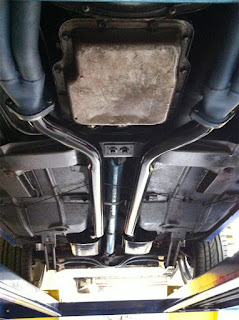
Vehicle engineers have established broad exit channels for car engine exhaust , but there’s always room for improvement. A header back exhaust system reinforces this maxim by pulling up the proverbial bootstraps of the aftermarket craftsman and extending the factory replacement process all the way to the engine manifold. For a portrayal of how this process makes headway, read on and embrace our tailpipe-to-engine rundown. What is a Header Back Exhaust System? Power-robbing exhaust components go straight out the window when the kit extends all the way to the engine header. Everything, and we mean everything, is swapped out during this expansive upgrade. In doing so, the diameter of the exhaust pipework is increased, as is any intermediate linkages and crossover pipes. Finally, the muffler and catalytic converter can optionally be ousted in favour of improved chambers, but this latter rationale is subject to a manufacturer’s interpretation of the kit. Removing System Bottle...

Are Exhaust Noise Different in Cars and Motorbikes?

Image
The engine in a motorbike is smaller than a car engine, yet its noise profile is louder than its four-wheeled highway cousin. Admittedly, that larger engine is concealed in the car engine compartment, an enclosed alcove that can be soundproofed, while the two-wheeler wears its power plant out in the open. Still, this question begs an answer. Are there exhaust noise differences between cars and motorbikes? Motorcycle Culture Unlike cars, motorbike owners often buy their wheels with the sole intent of putting the bike on steroids. The biker immediately opts for aftermarket pipes. The bike pipes are shorter than a car exhaust system , though, as is the muffler housing . The upshot of this condensed exhaust system is more noise. Essentially, that biker culture and the motorbike’s streamlined form encourage noisy leanings. That bias demands svelte pipework, tighter turns on a slimmer frame, and a near obsessional need to feel that noise vibrate the owners’ fillings. Engine Ar...

Double Chamber Exhaust System

Image
A double chamber exhaust system  is arguably one of the most attractive aftermarket additions on the market. Instead of a narrow containment area, one that limits the processing innards, a beefed up double chamber unit provides ample gas routing space. Broadened  exhaust tips  peer out from the expanded profile so that the overall shape of the system suggests pure performance output force. With that being said, do they deliver on that performance front as well as they do in the looks department? Double Chambered Performance Gains  If the different pipe crossover profiles in the mid-pipe lines act as inline control elements, the sections that control how the back pressure gasses interact, then an end-point  double chamber exhaust system  manages that enhanced performance envelope at the output threshold. Designed with doubled-up tailpipes, the expanded chamber provides a figurative exclamation point of exhalation for those gases, with the signature...

Muffler Design and Sound Absorption Strategies

Image
Aftermarket enthusiasts wade through distracting piles of advertising media. Digital or paperbound, there’s usually more hype than anything else locked inside the promotional literature. How do we separate engineering science, the real performance gains, from the wily publicity brochures? Maybe, just this once, all of the available styles and types of aftermarket exhaust systems are muddying the waters. What’s needed is a strategy, a muffler design and sound absorption game plan. A Noise-Based Muffler Design Strategy The top exhaust system brands make their performance gains a reality, but they’re sometimes a little coy when it comes to explaining the engineering methods behind the product. You start your strategy with a shortlisting process, a way of putting your thoughts on paper. What do you want the muffler to do? Is there a sound profile you want to emulate? Yes, you want to absorb the sound, but you also probably want to tune the noise until it reproduces a legendary ...

Skilled Car Exhaust Repairs – Required for Long Life of the Engine

Image
For the long life of the engine, the exhaust system must works properly in the car.  Exhaust System  is the most basic feature and required system for the vehicles. For giving the long life to the engine, must ensure that the air flows through with effortlessness and also doesn’t grounds any unnecessary musty air which may create any problem in future. The left burnt fuel and oils will shorten the life period of the engine. After some period of use, may be the car is making some loud and unwanted noise, then the problem is with the exhaust system. Number of sure signs which tells you that the exhaust of the car is needed a repairing. The signs are reducing of mileage, increasing in the noise of the engine, the odd vibrations of gas pedal or wheel steering. The detecting of a leak is always a harder and difficult task which is done only by a professional  Car Exhaust Repairs . The set limit for the car noise is 90dB and id the limit is increased then exhaust syst...

Exhaust Muffler – Fitting Any Exhaust System

Image
  An  exhaust muffler   and it is also called muffler or silencer and it is an essential component of a car’s exhaust system. The muffler is used for reducing the noise amount which is produced by the vehicle engine. Components in Engine turn unlikely to wear out due to the vibration of the primary loud noise. A car’s exhaust system is created not only to reduce noise, but it also works and responsible for reducing harmful emissions from entering our atmosphere. A proper functioning muffler not only sounds better but they are also better for you, your car, and our environment. If you would suddenly hear some weird engine noise you must have to check exhaust system. If you think that you might have a broken muffler, don’t wait for too long to get it checked out. Exhaust can enter the vehicle when your muffler is broken. It is important that this isn’t put off. With installed Mufflers, it can make your car trip more enjoyable to drive by reducing engine noise...

Improve the Performance of Your Vehicle with an Improved Exhaust System

Image
If you are looking to fit a new exhaust system or existing  4wd exhaust systems  repair to improve the performance of your vehicle with an improved exhaust system, then it is a good idea and you should also know about exhaust systems. Adding a great performance exhaust system to your vehicle is one of the best investment that will give you great returns back. A performance exhaust system will give you best result in increased horsepower, fuel efficiency and stylish appeal. We install various kind of performance exhaust systems depending on the vehicle and the requirement of customers. These exhaust systems are specifically for the performance applications, such as for increasing better performance, better gas mileage and overall better fuel efficiency. There are some reasons to change or upgrade your existing restrictive and old factory exhaust systems, for a free-flowing and high-Performance Exhaust. With improved exhaust systems, you should have benefited from reducin...